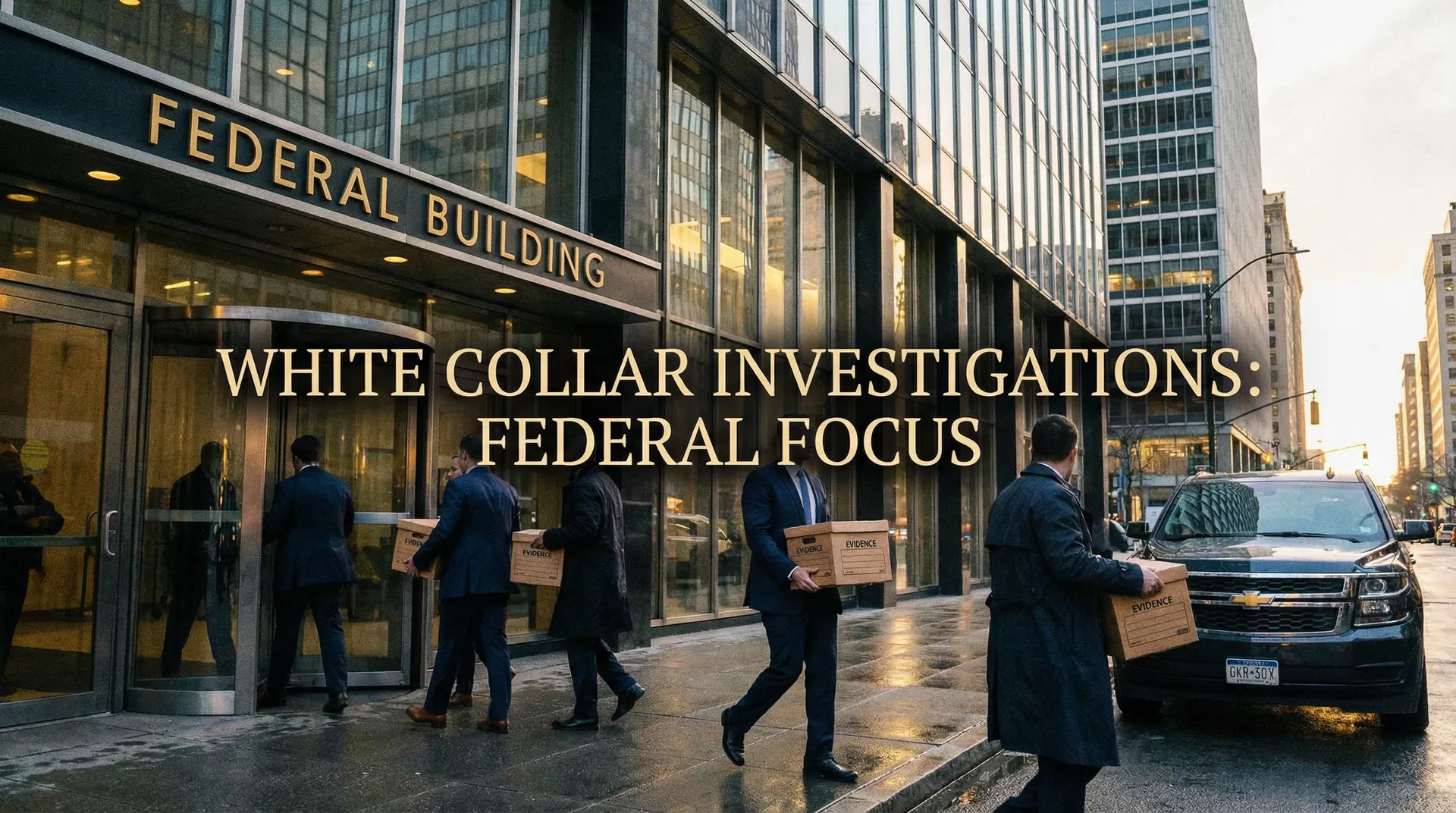
White Collar Crime 2/28/2026
Federal White Collar Investigations: Early Defense Strategy and Tactics
Federal White Collar Investigations: Early Defense Strategy
By Andrew P. Morrison
White collar investigations often begin with grand jury subpoenas or target letters from the U.S. Attorney's Office. Early identification and response are critical to protecting the client's interests.
Recognizing the Signs
Target Letters
A target letter indicates the recipient is a subject or target of a federal investigation. Key steps upon receipt:
- Retain experienced federal defense counsel immediately
- Preserve all potentially relevant documents
- Do not discuss the matter with potential co-targets
- Assess exposure and potential charges
Grand Jury Subpoenas
Subpoenas for documents or testimony require careful analysis:
- Determine the scope and relevance of requested materials
- Assert applicable privileges (attorney-client, work product, Fifth Amendment)
- Negotiate modifications to overly broad requests
- Comply with valid portions to avoid contempt
Parallel Proceedings
Parallel civil and criminal proceedings create unique challenges:
- Statements in civil proceedings may be used in criminal cases
- Fifth Amendment invocations in civil cases may result in adverse inferences
- Regulatory investigations may share information with criminal prosecutors
- Timing and coordination between proceedings require strategic planning
Proffer Agreements
When cooperation is appropriate, proffer sessions ("queen for a day" agreements) allow:
- The client to provide information to prosecutors
- Limited use immunity for statements made during the proffer
- Assessment of the government's case strength
- Potential negotiation of favorable plea terms
Risks of Proffers
- Statements may be used for impeachment if the case goes to trial
- The government learns the defense strategy
- Inconsistencies can lead to additional charges
Strategic Considerations
- Conduct an internal investigation to assess exposure
- Implement a litigation hold for document preservation
- Advise employees on their rights and obligations
- Consider voluntary disclosure to regulators when appropriate
- Maintain Fifth Amendment protections while cooperating selectively
Early intervention can reduce charges or influence sentencing outcomes significantly.
6 Comments
Share:
Comments
No comments yet. Be the first to share your thoughts!