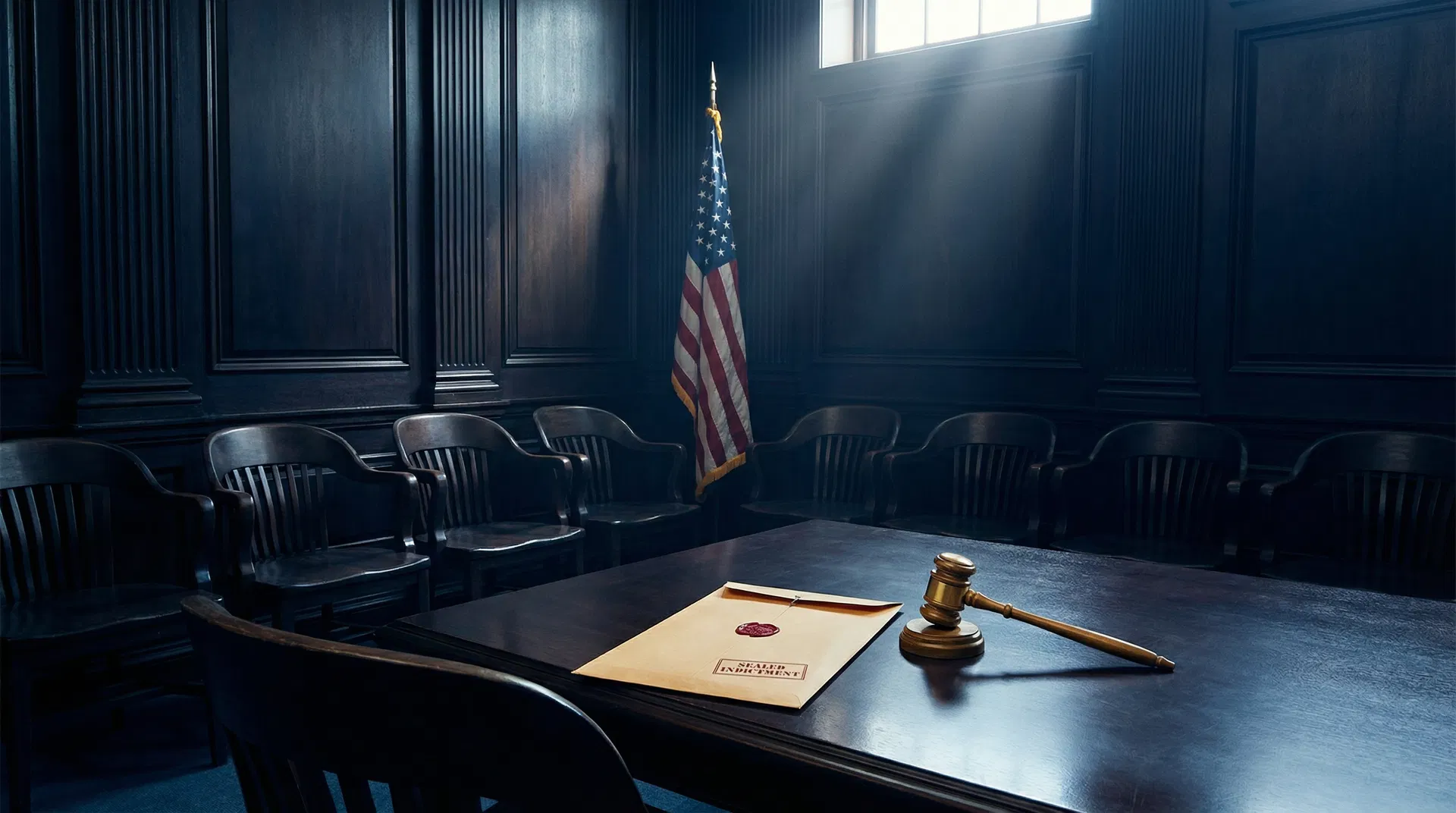
How Federal Grand Juries Work
By Jonathan Marks
Federal grand juries serve as a constitutional check on prosecutorial power, determining whether probable cause exists to issue an indictment. The Fifth Amendment requires grand jury indictment for all federal felonies.
Grand Jury Basics
- Composed of 16 to 23 citizens
- Requires a vote of at least 12 to return an indictment
- Proceedings are secret under Federal Rule of Criminal Procedure 6(e)
- Grand juries sit for up to 18 months, with possible 6-month extensions
What Happens During Proceedings
- Prosecutors present evidence and call witnesses
- Defendants typically cannot present evidence or cross-examine witnesses
- The standard is probable cause — much lower than beyond a reasonable doubt
- Grand juries have broad subpoena power for documents and testimony
Subpoena Compliance and Privileges
Witnesses who receive grand jury subpoenas must comply unless they invoke a valid privilege:
Fifth Amendment Privilege
- Witnesses may refuse to answer questions that could incriminate them
- Immunity (transactional or use immunity) may be offered to compel testimony
Attorney-Client Privilege
- Communications between attorney and client are protected
- The crime-fraud exception may override this privilege
Defense Strategy
- Advise clients on their rights before grand jury appearances
- Negotiate with prosecutors regarding scope of testimony
- Consider proffer agreements as alternatives to grand jury testimony
- Monitor for prosecutorial misconduct or irregularities
- Prepare for potential indictment and arraignment
Grand jury proceedings are a critical stage where early defense involvement can significantly impact case outcomes.
Tags:grand juryindictmentsubpoenaFifth Amendmentfederal procedure
Share: